

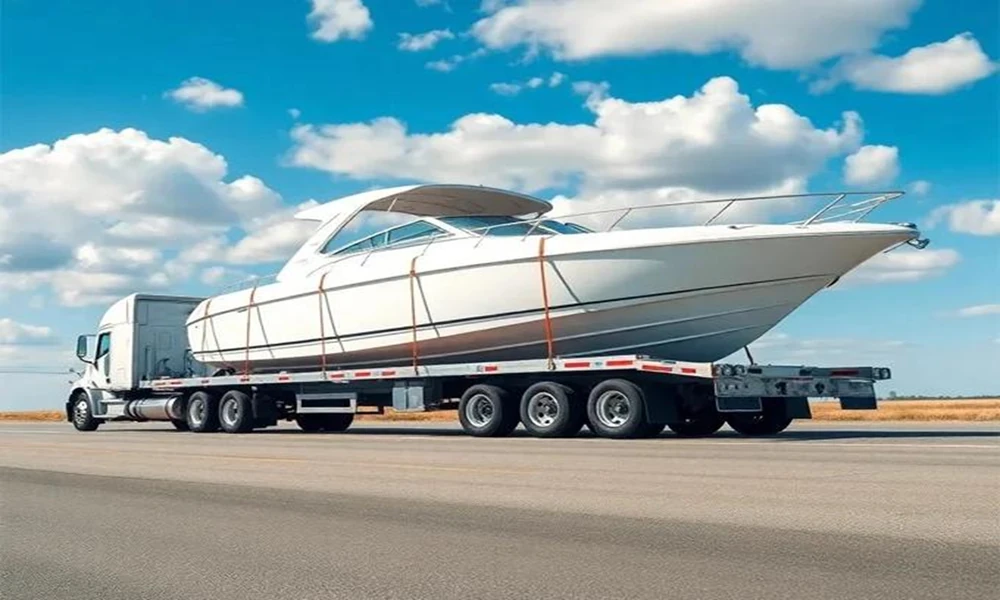
Moving a boat across state lines involves more than arranging a truck and choosing a delivery date. Even an experienced boat owner may encounter unexpected challenges when a vessel needs to travel hundreds of miles by road.
Boat dimensions, pickup access, marina schedules, and transportation requirements can all influence how smoothly the move proceeds. Overlooking one detail may lead to additional coordination, scheduling changes, or unnecessary expenses.
Whether relocating for seasonal boating, purchasing a vessel from another state, or moving closer to a new marina, understanding the planning process can make the experience far more manageable.
1. Accurate Boat Measurements Are More Important Than Expected
One of the most common planning oversights is assuming that a boat’s advertised specifications provide everything needed for transportation.
Manufacturers typically list measurements such as length, beam, and draft. However, the dimensions that matter for overland transportation may differ from those listed in a sales brochure.
For example, radar arches, antennas, towers, and other permanently mounted equipment can affect overall transport height. The trailer configuration may also influence the final loaded dimensions.
Before arranging transportation, owners should confirm:
- Overall vessel length, including relevant protruding equipment.
- Maximum width at the widest point.
- Total height in the proposed transport configuration.
- Approximate vessel weight, including additional equipment.
- Whether removable components require professional preparation.
Accurate measurements help transportation professionals assess equipment needs, route restrictions, and potential permit requirements.
2. Pickup and Delivery Locations Need Careful Evaluation
Boat owners sometimes focus entirely on the distance between two destinations without considering whether a transport vehicle can safely access either location.
A marina may have narrow driveways, restricted turning areas, overhead obstructions, or limited space for loading equipment.
Similarly, a residential pickup location might not accommodate a large truck and specialized trailer.
Before confirming transportation arrangements, it is helpful to communicate directly with both locations.
Ask whether large commercial vehicles can enter the property, whether loading assistance is available, and whether appointments are required.
Owners should also establish who will be present during pickup and delivery. Having the appropriate contacts available can prevent confusion when the transport vehicle arrives.
For certain vessels, additional lifting equipment or coordination with a boatyard may be necessary. Identifying these requirements early helps avoid last-minute changes.
3. Why Coordination Matters as Much as Transportation
Long-distance boat relocation often involves several parties working toward the same goal.
The boat owner, transportation carrier, marina staff, storage facility, and sometimes a dealership or broker may all need to exchange information.
Without clear communication, even a straightforward relocation can become unnecessarily complicated.
For example, a carrier might arrive before the marina has prepared the vessel for loading. Alternatively, the destination facility may require advance notice before accepting a delivery.
This is where personalized boat transport services can be relevant, particularly when a move requires individual scheduling, carrier coordination, pre-transport planning, and communication between multiple locations.
Rather than treating transportation as an isolated task, owners should consider the entire relocation process.
A clear plan should identify the primary contact, define responsibilities, and establish how changes will be communicated.
It is also useful to confirm who handles preparation, loading arrangements, delivery instructions, and condition documentation.
These details create a more organized process and help everyone understand what is expected.
4. Vessel Preparation Should Never Be an Afterthought
Preparing a boat for road transportation differs from preparing it for a normal day on the water.
Equipment that remains secure while cruising may not be suitable for prolonged highway travel.
Loose accessories, removable electronics, deck furniture, and unsecured personal belongings can create avoidable problems.
Owners should review preparation requirements with the transport provider and qualified marina personnel before pickup.
Common preparation considerations include securing loose items, assessing removable equipment, checking compartments, and protecting vulnerable exterior components.
Depending on the vessel and transportation arrangement, professional assistance may be necessary to remove or secure larger structures.
It is also sensible to photograph the boat before transportation.
Clear photographs of the hull, deck, equipment, and visible existing damage can provide a useful condition record.
Preparation responsibilities should be agreed upon in advance rather than assumed to be included in every transportation quote.
5. The Lowest Quote May Not Represent the Full Cost
Transportation costs are important, but comparing quotes solely by their initial price can be misleading.
Two estimates may cover different services or depend on different assumptions.
One quote might include certain coordination activities, while another could leave loading arrangements, specialized equipment, or other expenses to the vessel owner.
Boat owners should request a clear explanation of what is included and what may require additional payment.
Important questions include:
- Are any permits or escort arrangements required, and who pays for them?
- Are loading and unloading services included?
- What happens if pickup or delivery dates change?
- How are unexpected access restrictions handled?
- What insurance documentation is available for review?
Written clarification makes it easier to compare transportation arrangements on more than price alone.
It also reduces the likelihood of disagreements about responsibilities once the move is underway.
6. Scheduling Flexibility Can Prevent Unnecessary Stress
A planned delivery date may depend on weather, route conditions, equipment availability, permits, and the readiness of both facilities.
For that reason, it is sensible to build reasonable flexibility into a long-distance relocation.
Owners moving a vessel into seasonal storage or arranging delivery after a purchase should avoid assuming that every stage will occur at an exact hour.
Confirm the expected communication process before transportation begins.
Find out who provides scheduling updates, how changes will be reported, and what arrangements are necessary if the destination cannot accept the boat as planned.
For time-sensitive moves, discuss deadlines early so that practical scheduling constraints can be considered before commitments are made.
Conclusion
A successful long-distance boat move depends on preparation, accurate information, and consistent communication.
Boat owners who verify vessel dimensions, evaluate loading locations, understand service responsibilities, and coordinate with everyone involved are better equipped to handle the challenges of transportation.
The most useful approach is to plan beyond the journey itself. From initial preparation to final delivery, careful attention to each stage can help make boat relocation more predictable and organized.
